A Tale From Tasmania - by Gaven Dall’Osto
Author: Ellaspede Date Posted:14 November 2025
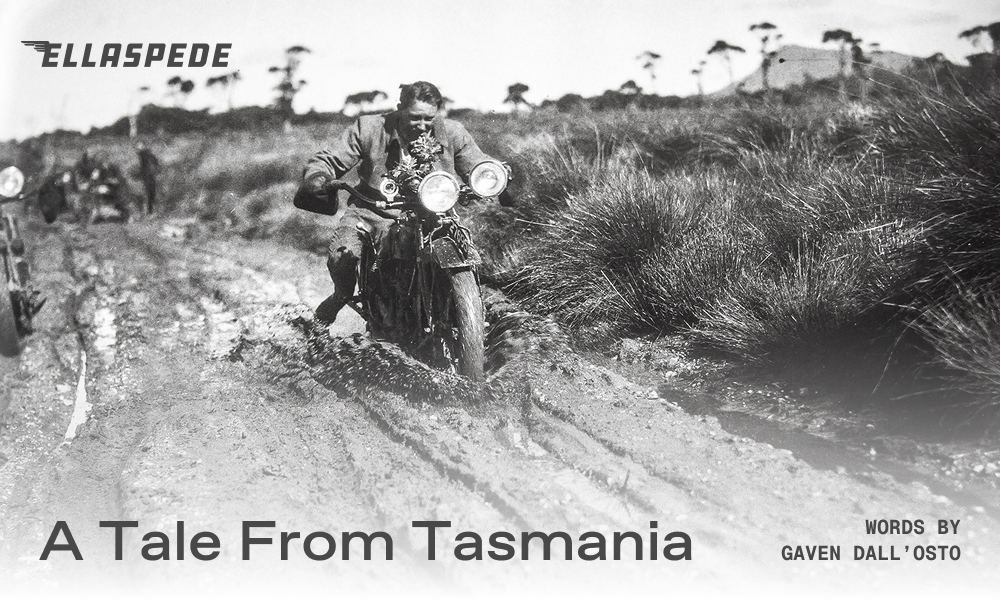
Motorcycle tales become apparent in strange places. On a walking adventure to Cradle Valley (Tasmania) we were at the Ranger Interpretation Centre admiring many photos of the pioneer adventurers on the walls. My wife suggested I needed to see one particular photo and a spark was lit to research this incident further.
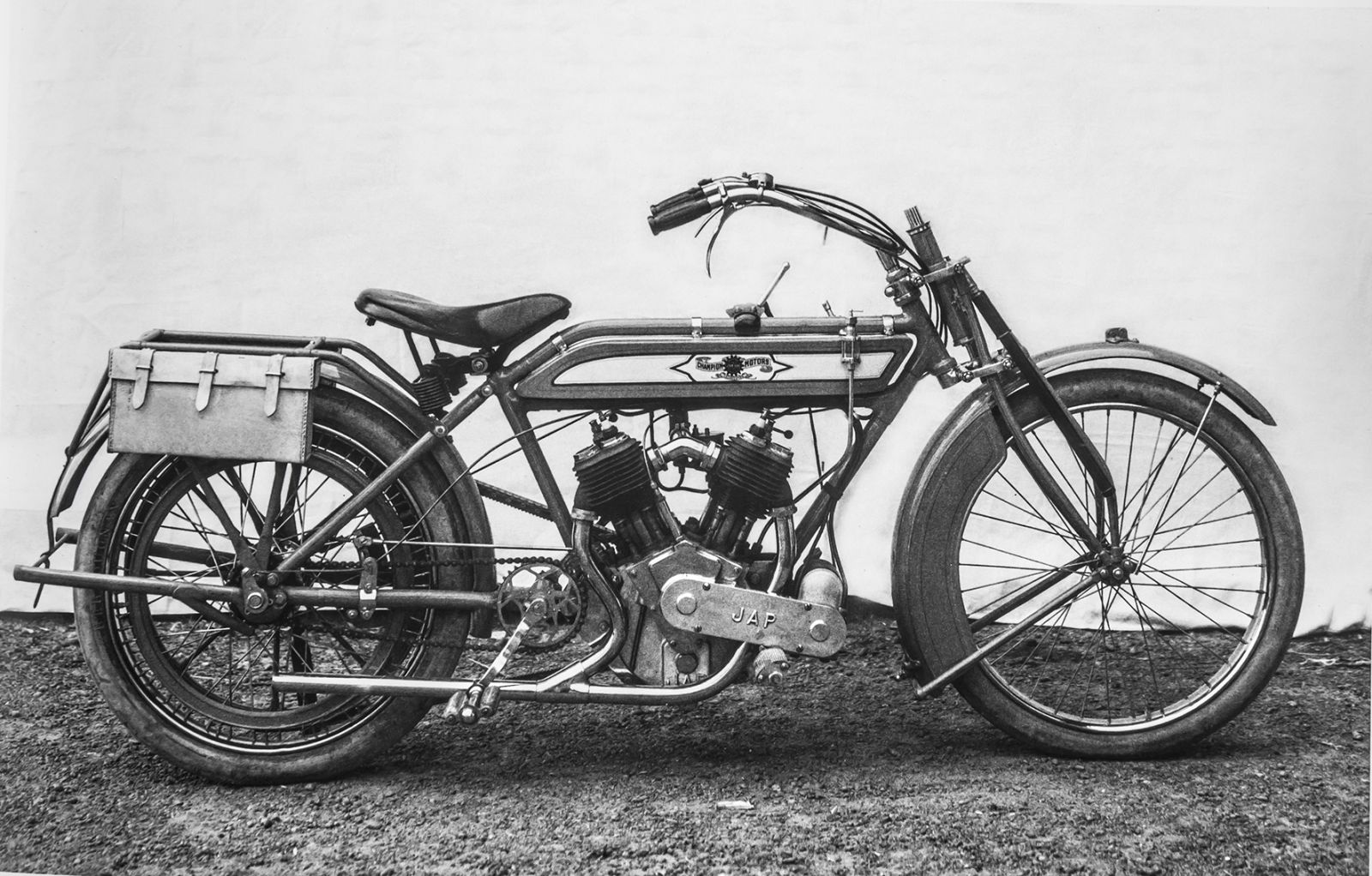
Enter character one, Herbert J. King (aka Herb or HJ)
Herb’s dad John King, his wife and two sons (William & George) migrated to Tasmania from England in 1890. Herb was born on May 31, 1892 in Hobart. The family moved to Launceston and purchased Champion Cycles in 1901. The business had extensive workshop facilities which included plating, baked enamelling, lathes and milling machines, and brazing to make bicycles. John King saw the future, bought a (Melbourne-made) Beauchamp motor bicycle that same year and soon began building his own ‘Champion’ motor bicycles using Minerva, Peugeot and then JAP engines, making them the first motor bicycle business in Tasmania. The ‘Champion’ was manufactured to meet Tasmanian conditions, strongly-framed with a very low seat position, increased engine clearance and large, heavy tyres. The sons grew into the business and they were all keen on motorcycle racing. Will King set the Launceston to Hobart record on a Champion Minerva in 1904, breaking it many times over in the following decade. George King also raced the ‘Champion’, and managed the workshop. Herbert managed the showroom and spare parts business. Herb loved motorcycles, taking part in races, reliability trials, hill-climbs and famous for his long-distance adventure trips. John King & Sons became agents for Peugeot, many English motorcycles brands, J.A.P. engines and later, Indian motorcycles.
The other item of technology that Herb loved was the camera. He used photography both as an outlet for his creativity and also as a tool for publicising the family business. HJ King was a conservationist, botanist and photographed not only plants and landscapes but all facets of Tasmanian life. He used the motorcycle to get him to most photographic locations. He married young to Lucy Minna Large in December 1918. Lucy was an adventurer, horse rider and one of the first women to gain a motorcycle license in Tasmania. Before their first child was born, Lucy featured in King’s photography, often seated in the sidecar of Herb’s Indian on their adventures. While the (family-made) ‘Champion’ would have figured highly in his early riding life, it was the Indian that appears in most of Herb’s photographs. Pre-marriage it was a solo Indian and then as an outfit.
A series of King’s photos were mounted and on the surrounding frame there were captions to promote the “Indian Motocycle” (yes, the spelling is as Herb captioned). Here are some examples up to 1919:
“Indian Motocycles, first to reach Projection Bluff, 4,000 ft. 1915”,
“Snowed up on the Great Lake Road. August, 1916.”
“Indian goes furthest south, Cape Raoul”

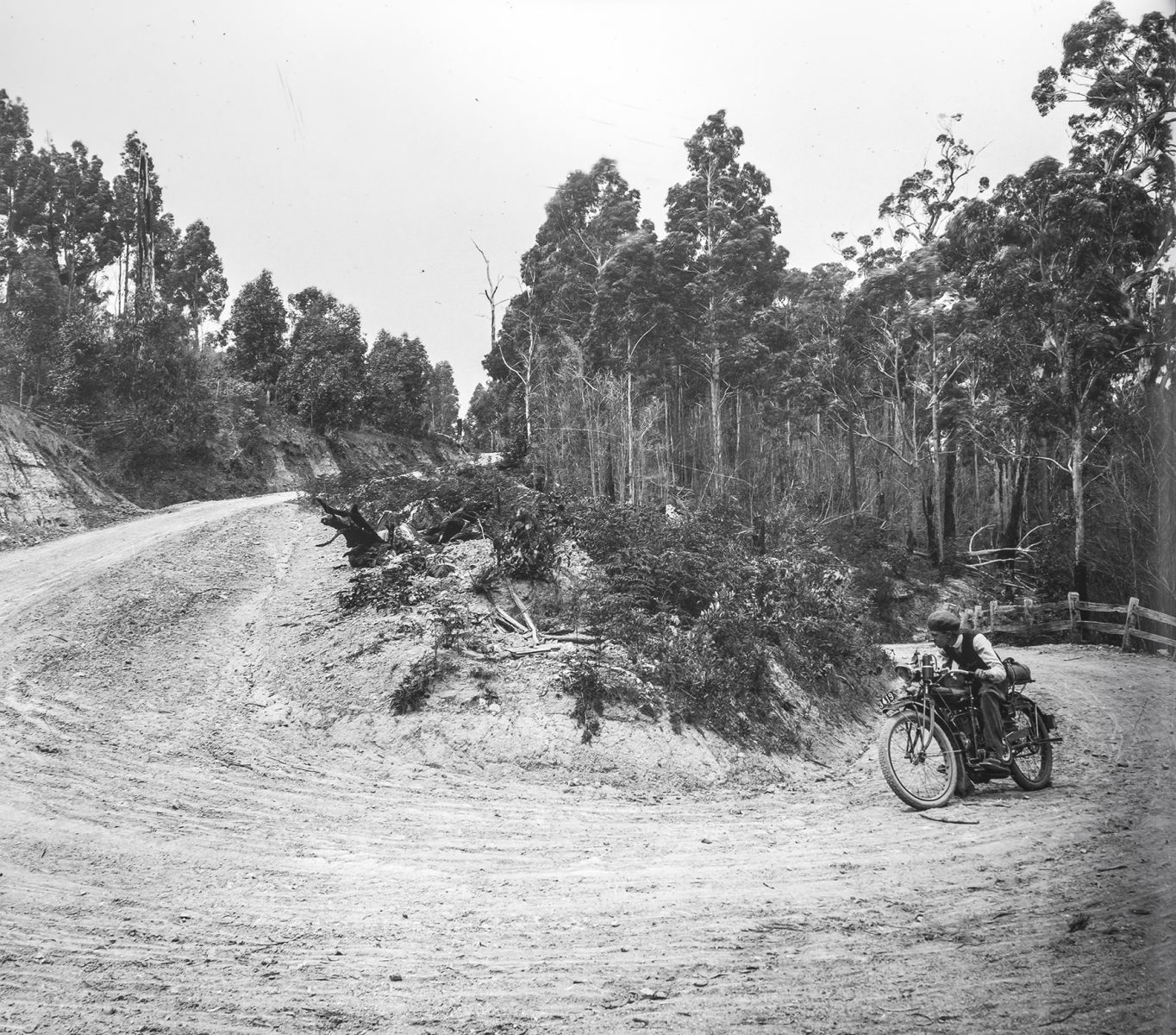
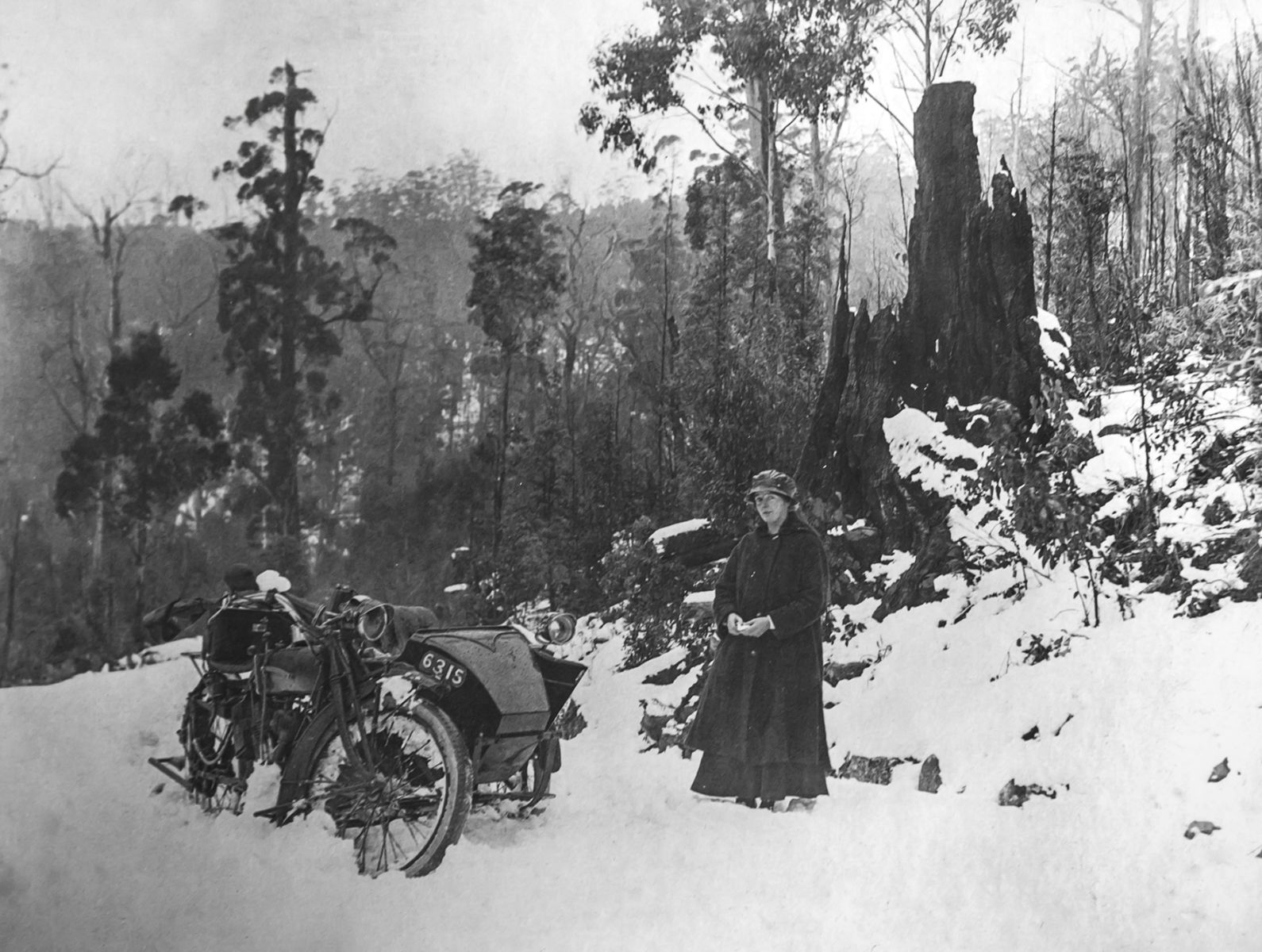
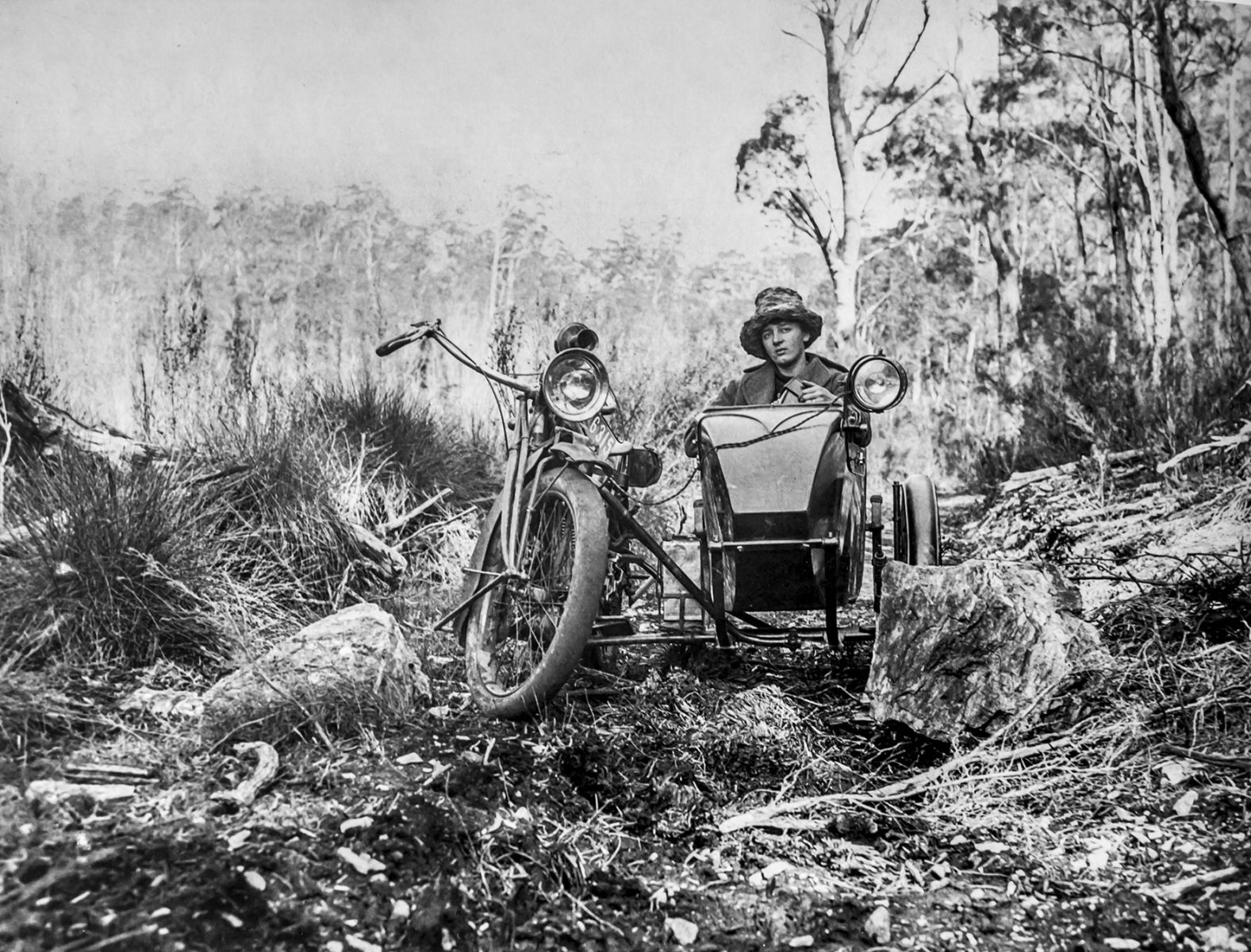
Other non-mounted photos include: King’s Champion Cycle Works employees circa 1911; (Herb King) rounding a bend on Elephant Pass 1914; Kate on Herb’s solo Indian circa 1914; Herb with a mate on solo Indians on Pine Lake road, 1915; George on his Indian outfit on a bad piece of Hellyer Road circa 1919 and Kate beside Herb’s Indian outfit in the snow, Pillingers Drive, Mt Wellington. Kate featured in the side-car: on East Beach in front of The Nut, Stanley circa 1919; on the road to Interlaken (early 1920) and on the road to Gunn’s Plains circa 1920.
In search of more remote locations, in December 1919 Herb, Lucy, her sister and a friend ventured toward Cradle Valley with Herb and Lucy on the trusty Indian outfit. The last part of the journey had to be by horse as it was barely a track. There Herb met Gustav Weindorfer, the proprietor of Waldheim Chalet at Cradle Valley. Weindorfer guided the Kings to the summit of Cradle Mountain, they became great friends and Herb was to return many times later.
Introducing character two: Gustav Weindorfer (aka Dorfer).
Gustav was an Austrian with a passion for nature, botany and agriculture. He left home not knowing what he wanted from life and arrived in Australia where the flora was strange and not very inspiring. He joined a Naturalist Club in Melbourne where he met a wonderful like-minded Tasmanian, Kate Cowle. He soon proposed and they moved to Tasmania, got married and spent their honeymoon roughing it on Mt Rolland ‘happily’ collecting plant samples. They purchased a farm at Kindred but Dorfer was lured to nearby Cradle Valley. It was green and mountainous, a bit like his home country, largely unexplored. He proclaimed it to be “El Dorado for a Botanist”. Kate had the funds to secure 200 acres of land there in 1910. Dorfer built a chalet (Waldheim) and invited naturalists, walkers and government officials to see this wonderland and to gather support to conserve the area as a National Park. It became a business and they later leased the farm while they spent most of their time at Waldheim. Unfortunately, Kate developed some serious health issues, which unfortunately took her life in April 1916, leaving Gustav heart broken. His only motivation was to continue their quest to have the Cradle Valley protected as a National Park.
Meanwhile Herb King continued with more captioned Indian photos like:
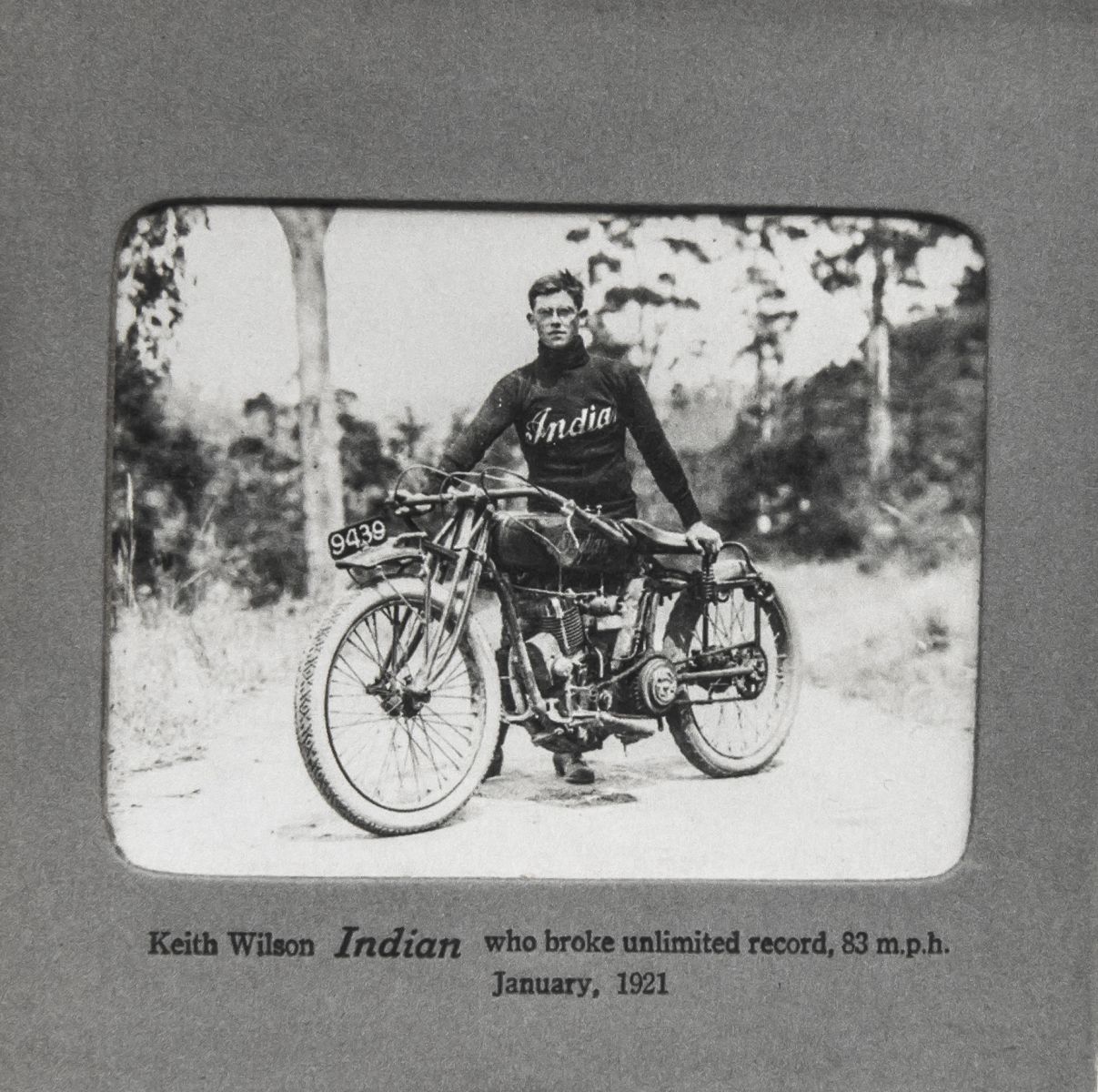
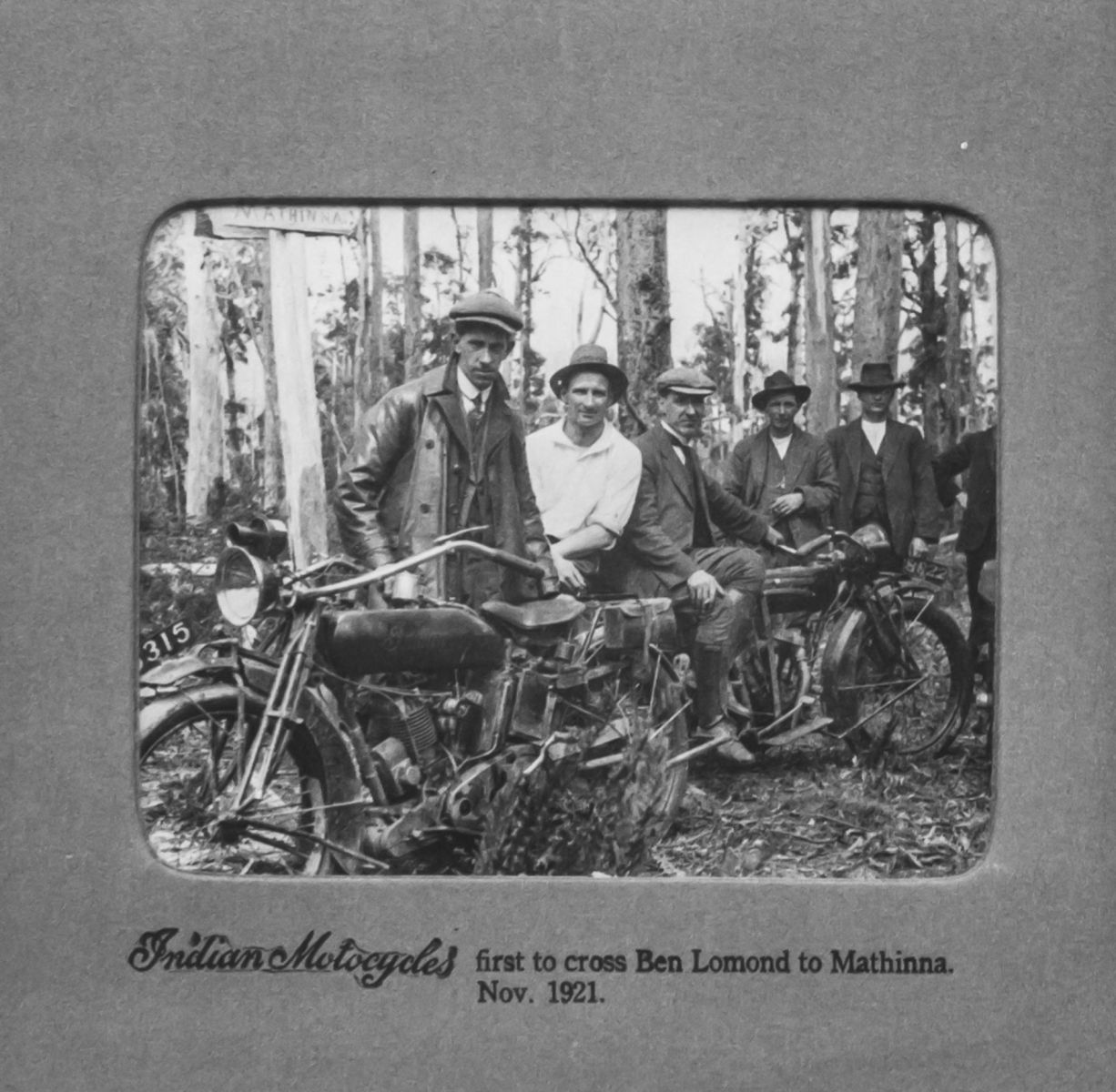
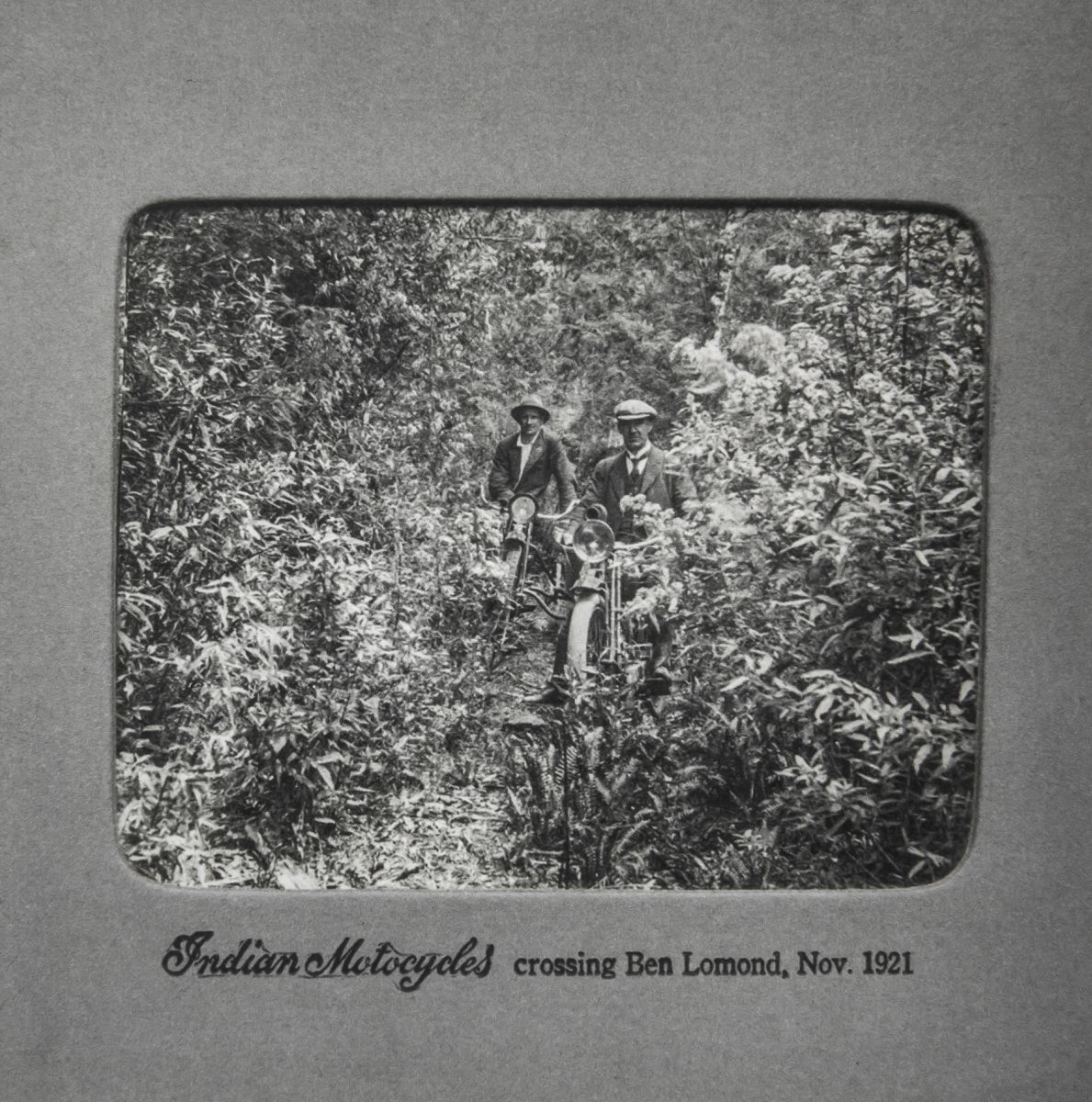
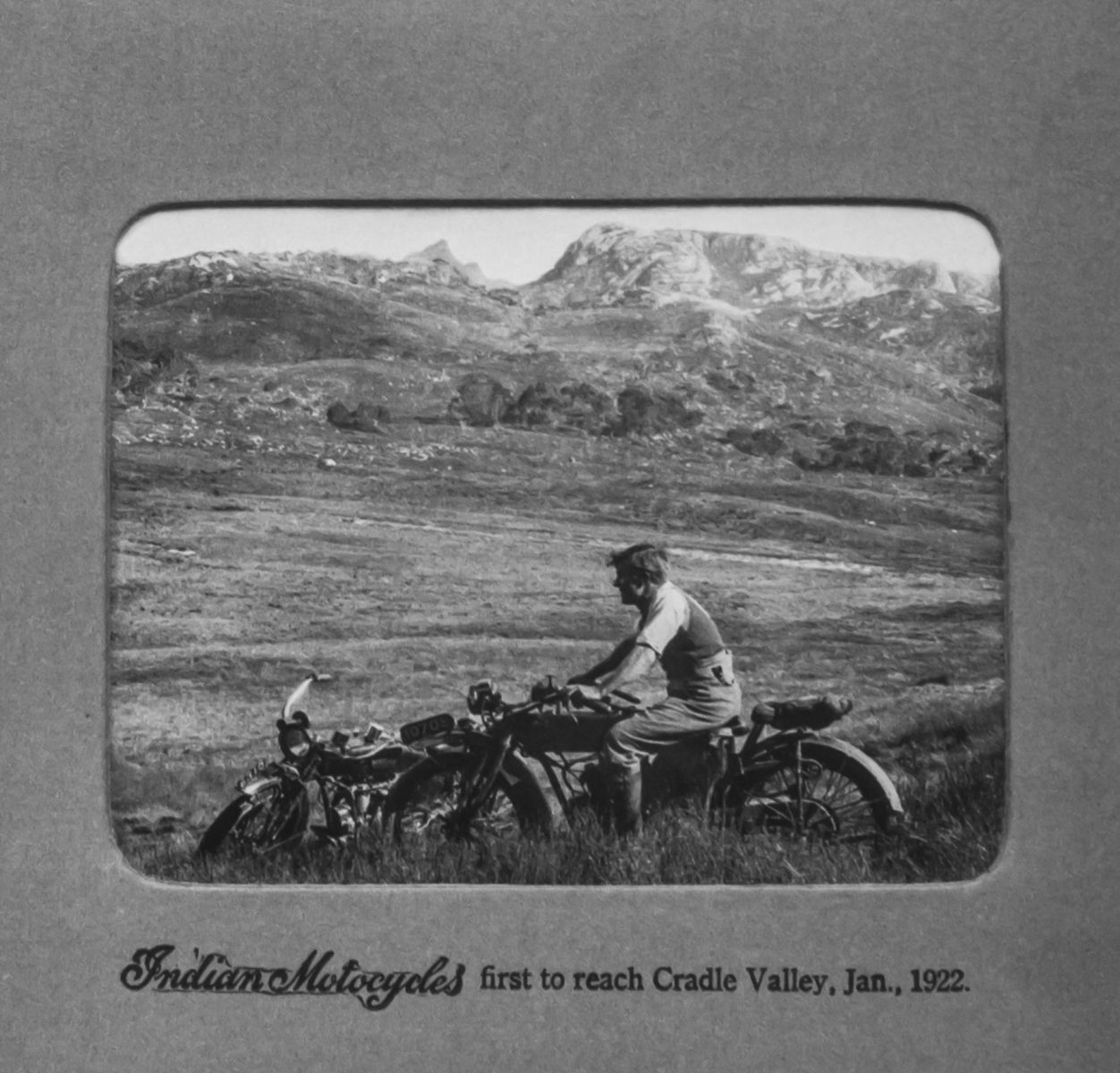
Other motorcycle-related photographs include:
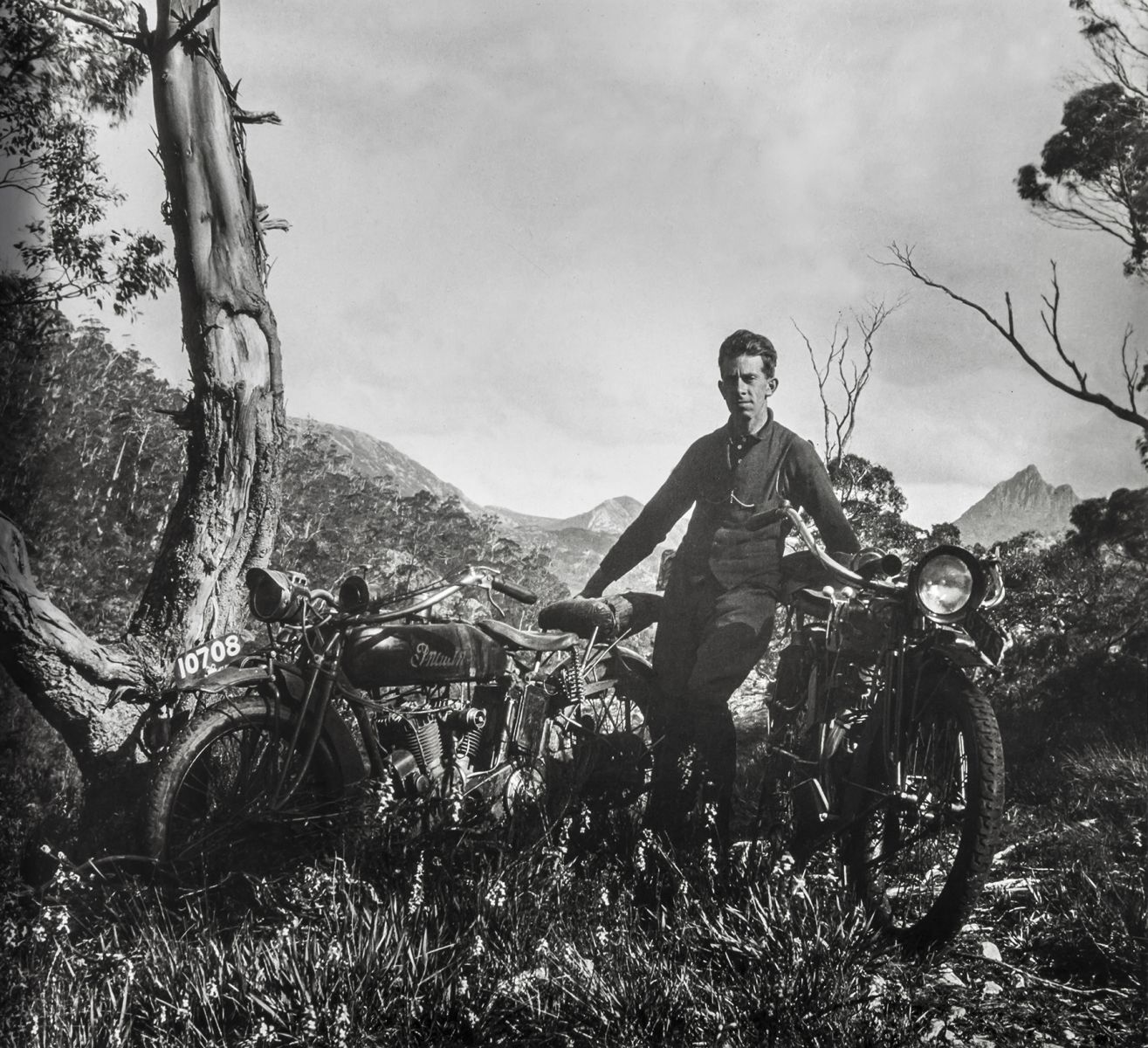
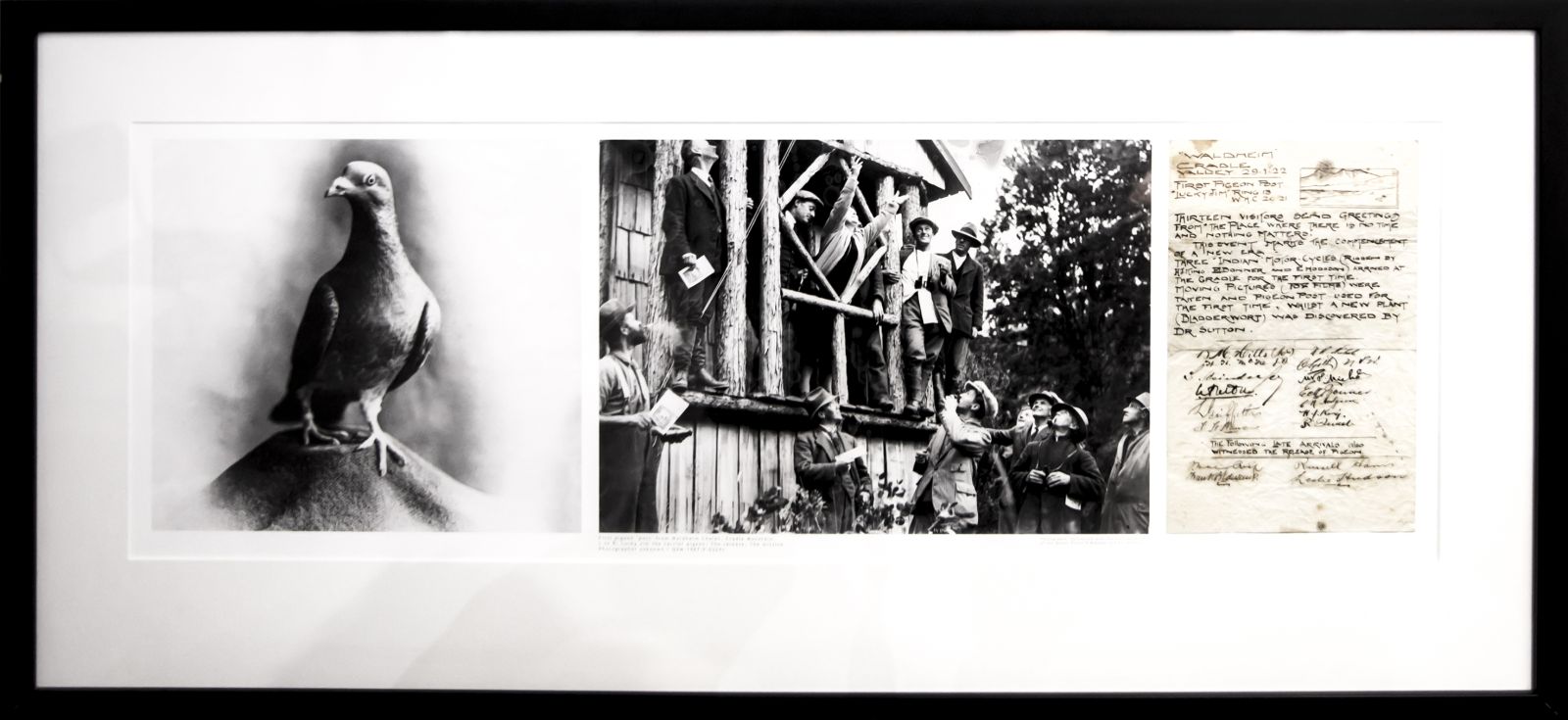
The 1922 posting of the first Indian to reach Cradle Valley brings us to the photo in the Interpretation Centre which included a pigeon, and beside it a letter. Mel Nichols bred and trained, ‘Lucky Jim’ a carrier pigeon who flew the first letter from Cradle Mountain to Westbury, 29th January 1922. The letter was a copy of this milestone postal technology and included the following excerpt which led me on this research journey:
“THIS EVENT MAKES THE COMMENCEMENT OF A NEW ERA.
THREE ‘INDIAN’ MOTORCYCLES (RIDDEN BY H. J. KING, E. BONNER AND E. HODGSON) ARRIVED AT THE CRADLE FOR THE FIRST TIME.”
Dorfer continued to run the Waldheim guesthouse and he also presented photos and lectures around Tasmania on the natural wonders of Cradle Valley. Then on the 16th of May 1922, Dorfer’s (and his supporters’) dream came true and 150,000 acres from Cradle Mountain to Lake St Clair was declared a Scenic Reserve and Wildlife Sanctuary.
Shortly after, on 13 September, 1922 the edition of the Mercury (Hobart) reported that “H J King presented a colour photographic lecture on his recent trip to Cradle Mountain Reserve at the Mayor’s Court Room at Town Hall. This was the result of 3 trips. The roads from Launceston to 15 miles from the accommodation house were in excellent order, but the last stage of the journey was usually done by horse-drawn vehicle, on account of the bad condition of the track. On one occasion, however, he had attempted to get right through by means of motor-cycle and after a particularly rough ride had accomplished the task.”
Herb continued with other Motorcycle racing and adventure photos. A post 1922 series of mounted photographs with sales captions includes:
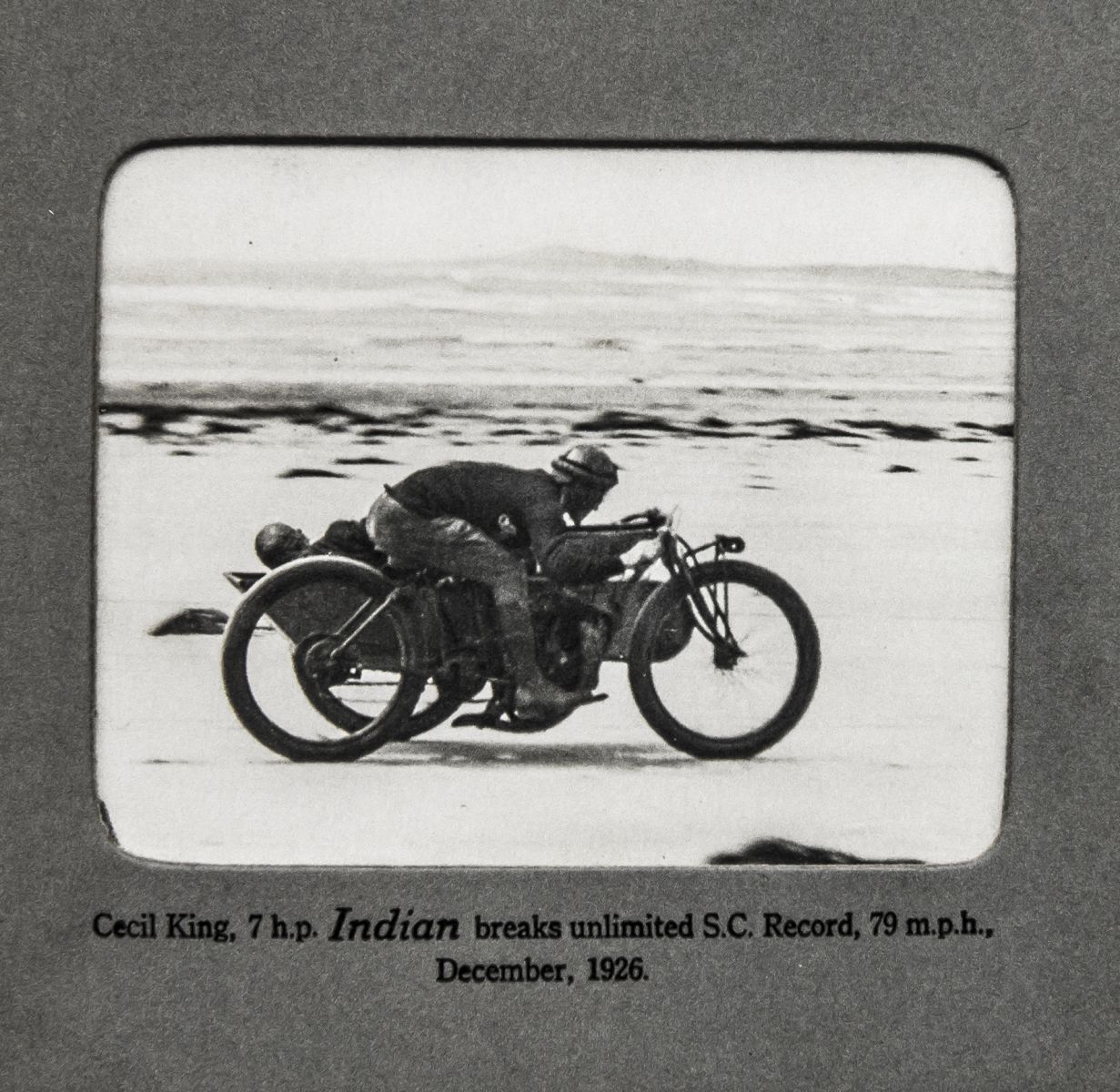
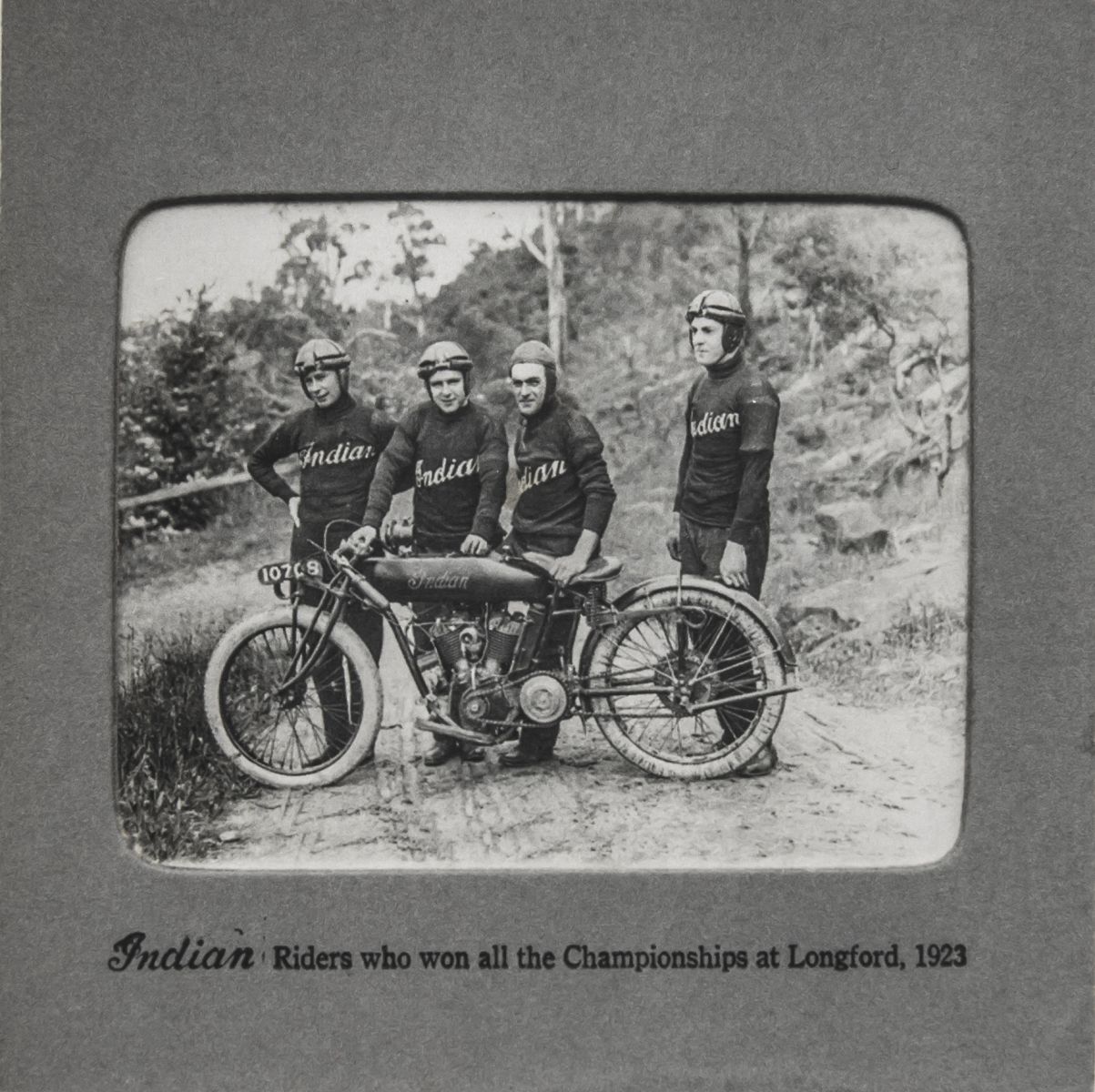
%2C%20winner.jpg)
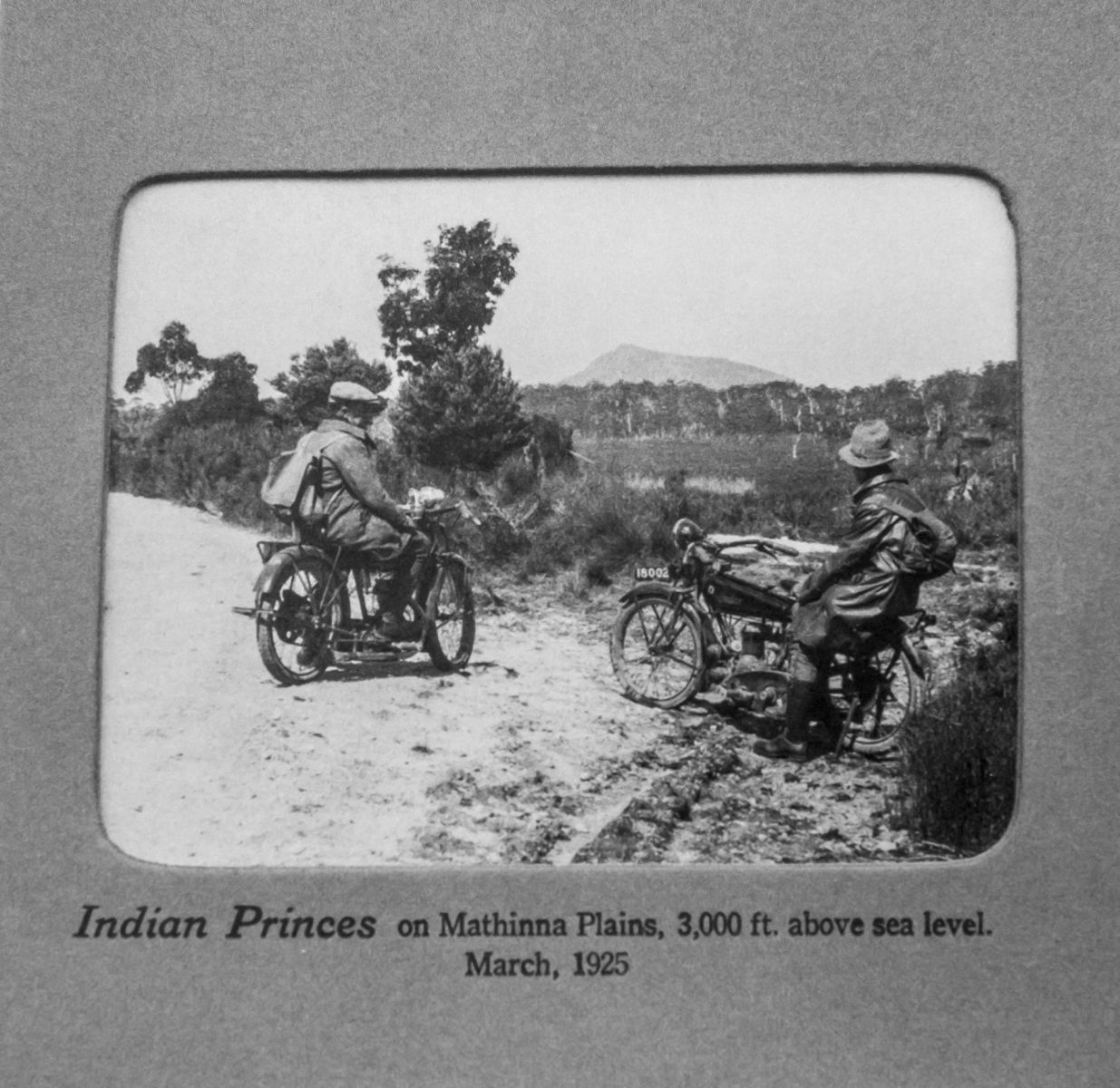
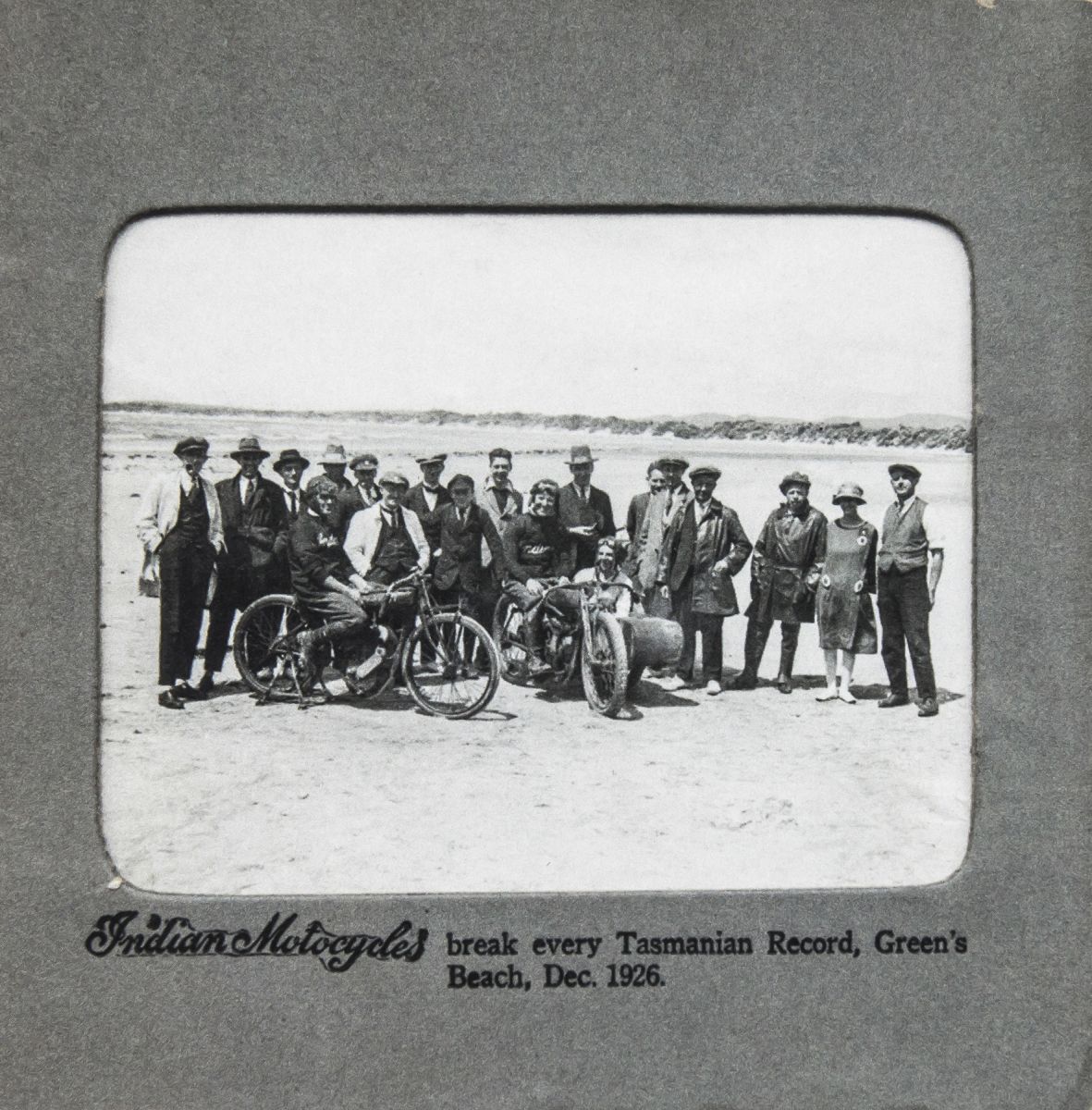
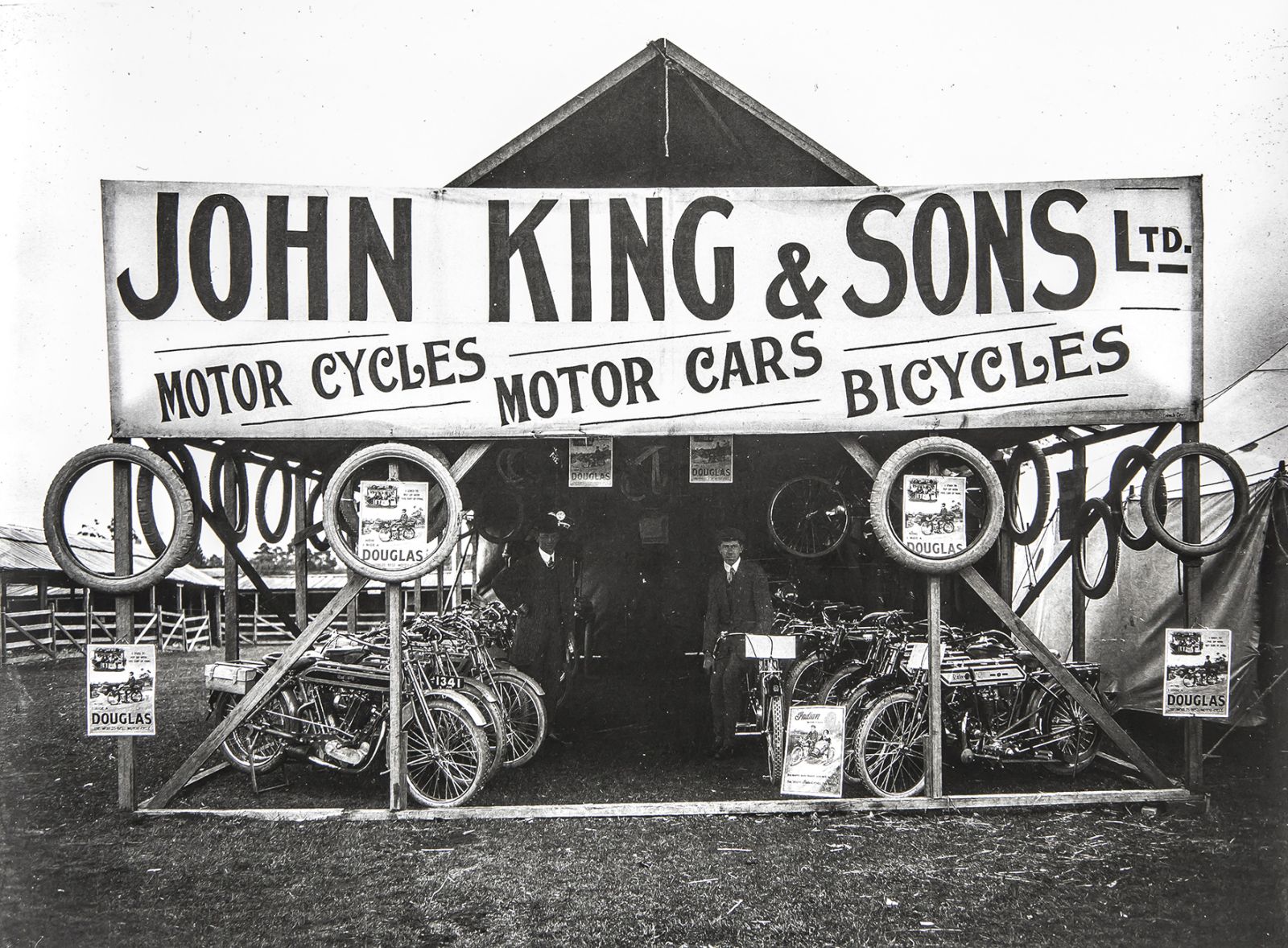
Other non-mounted photos include: Interior of the John King and Sons shop and showroom circa 1926; a muddy course 1927; Winners 1927 Reliability Trial and Maud Watkins riding an Indian Scout in the 24 hours Reliability Trial 1927.
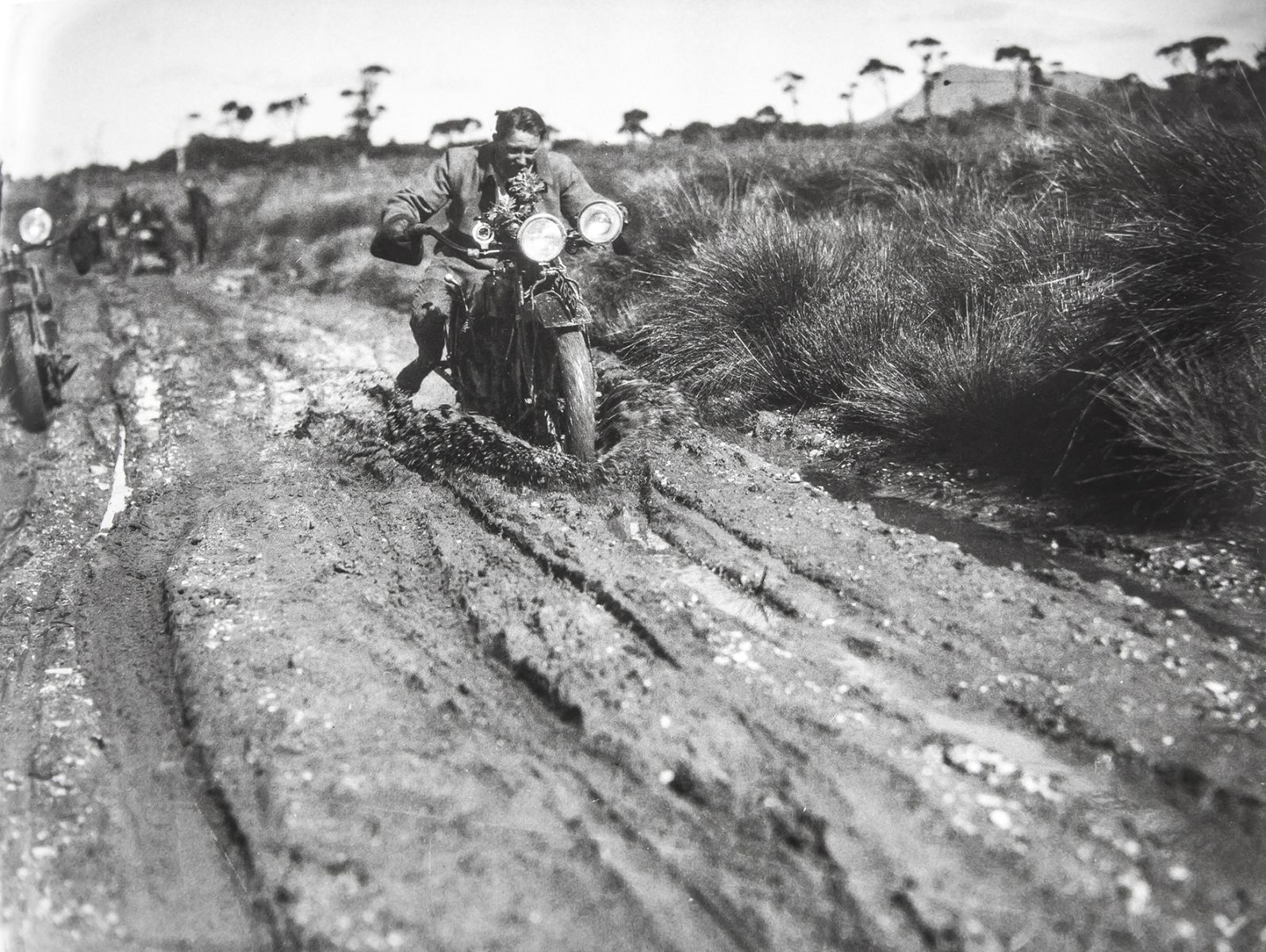
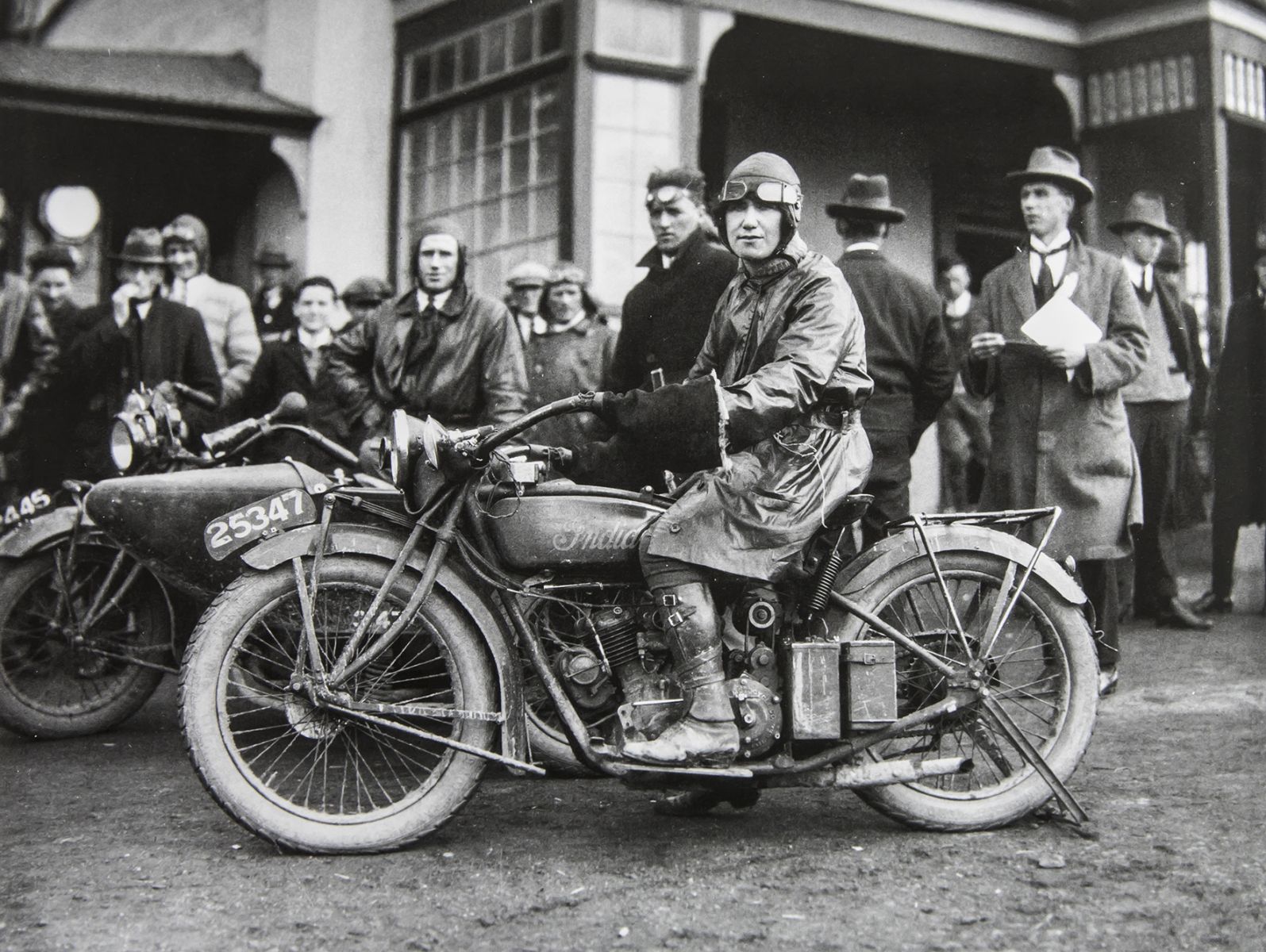
Jumping to the 30’s, the road to Waldheim was no better, but a number of people continued to bump along up to Waldheim on motorbikes inspiring Dorfer to buy an ‘Indian’ motorcycle with sidecar from Herb King in April 1931. A motorbike still had to be manhandled over the rough spots and in fact was not really suitable for someone like Dorfer, who had a heart condition. That year Gustav spent the worst part of winter touring around and visiting friends in warmer climes. He thoroughly enjoyed himself on his new mode of transport, going as far afield as Cape Portland, at the north-eastern tip of Tasmania. He wrote to his sister (in Austria) regularly and told her that nowadays he hated the winters and so intended to ride to warmer areas until spring. At the beginning of May 1932, Gustav was ready to close up the chalet and leave the valley. He was invited to stay with friends and family in Devonport, Ulverstone and then Launceston. On May 4 (according to a letter he wrote that night) he had meant to depart but had experienced some trouble starting his Indian. He finally gave up for the day. The next morning, he ran the outfit down the grassy slope to the track, trying to bump start the engine, but still, it would not start. He positioned a block and tackle to haul the bike up the slope again the next day. Returning to the bike at the foot of the slope, he must have tried desperately to kick the Indian into life, but the effort was just too much for him.
George Stubbs, an Ulverstone farmer, arrived on horseback to round up the cattle he had grazing on the Weindorfer property. His 15-year-old son, Wilfred, was riding ahead and arrived at Waldheim to find Gustav lying dead behind his motorbike. George contacted the Police and Dorfer’s body was taken down to Sheffield for a post mortem. The letters he had written that night established that he had died May 5, 1932, at the age of 58.
Herb’s life continued, his photos printed in many publications and he became very innovative in collaging photos, colour, movie film, and aerial photography. He is famous for making a special lens to take photos through a hole he cut in the floor of a friend’s biplane and created an aerial view of early Launceston in 1922 where he had spent in excess of 200 hours stitching 81 images together manually, resulting in a huge 1m x 1.25m image.
A newspaper article on May 30, 1939 reported that H J King had one of his photos exhibited in London at the exhibition of “Colonial and Overseas Pictorial Photographs”. The same photo was also sent to Queen Mary by the CWA of Tasmania.
Herb became honorary photographer for the Queen Victoria Museum and Art Gallery in Launceston for the years 1958 to 1962. He passed away in Launceston on February 18, 1973 and in 2014 several thousand glass plate and cellulose negatives were donated to the Queen Victoria Museum and Art Gallery. The Museum presented a special exhibition of his work in 2022 and published a book with an amazing title ‘HJ KING Cameras and Carburettors’. The book (to which I give some photo and information credit for this report) is still available in the QVMAG shop.
Author – Gaven Dall’Osto